
Beyond Relationships: Why Hybrid Memory Architectures Matter
Graph-based memory became a common direction in modern AI systems.
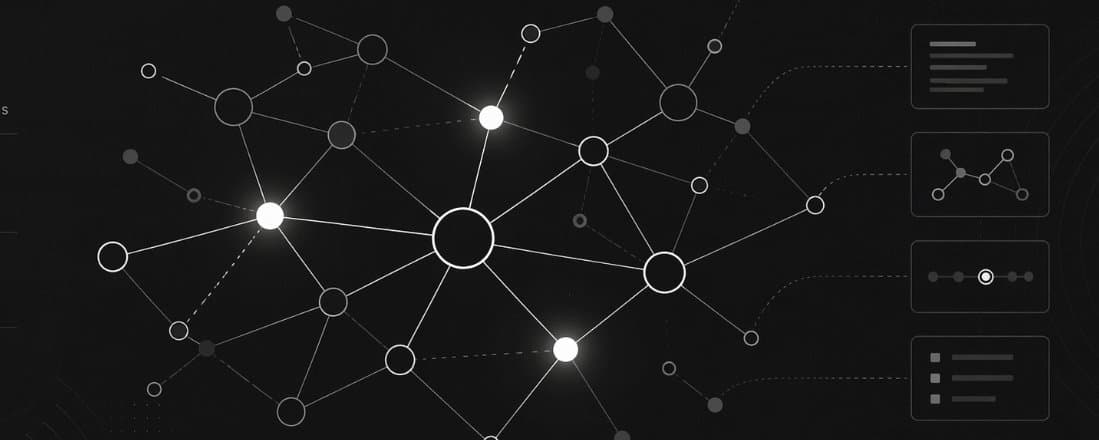
Instead of treating memory as isolated logs or flat chunks of text, it represents relationships between people, events, preferences, concepts, and history in a structured form. That approach can improve recall, retrieval, and long-term organization, which is why graph-based retrieval systems and memory layers became increasingly common in modern architectures.
But memory does not end at relationships.
In practice, we found storing everything increases retrieval noise faster than it increases usefulness.
Two nodes can be connected and still miss the bigger picture. The same fact can carry different weight depending on timing, intent, or current goals. An event may be relevant in one moment and irrelevant in the next.
Graphs are useful for representing structure. They are less complete at representing significance.
Essentially, (triplets) aren't enough to understand the nuance of what the actual source meant
**(User) → likes → (Python)**
**(User) → lives_in → (Bangalore)**
**(User) → works_on → (Editor Project)**
This structure is useful. It makes memory searchable, composable, and easier to retrieve than raw conversation logs.
But triplets alone do not capture nuance.
(User) → likes → (Python) does not tell you:
Do they use it daily or just admire it casually?
Do they still like it, or was that true a year ago?
Do they like Python for scripting, AI, or backend work?
Do they prefer it over Rust, or alongside it?
Was it a passing comment or a repeated pattern?
The edge exists, but the meaning around the edge is missing.
The same problem appears everywhere. A relationship can be factually correct while still being contextually incomplete.
Rigidity
Even when a memory system stores the right information, it can still fail because of how that information is represented.
Triplets themselves aren't enough and force the rich context that the actual information has to be clamped into a triplet or restructured entirely.
Triplets themselves are often not enough. They force rich, contextual information into a rigid subject-relation-object format, compressing nuance into a shape that may be easy to store but incomplete to understand.
Stored triplet:
(User) → likes → (Rust)

What might be missing:
- Uses Rust daily for systems programming
- Recently switched from Go to Rust
- Prefers Rust for performance-critical work
- Frustrated by borrow checker, but still committed
- Wants a Rust job in the future
- Interest increased over the last 6 months
The edge is valid. But the meaning around the edge is where intelligence lives.
So What Is Needed? A Hybrid Approach.
No single representation is enough.
- Raw logs preserve detail but are difficult to search.
- Triplets provide structure but lose nuance.
- Graphs capture relationships but can become rigid.
- Embeddings capture semantic similarity but often lack explicit reasoning paths, which is why many modern systems combine vectors with structured retrieval and ranking pipelines.
Each format solves a different part of the memory problem. None solves all of it alone.
What is needed is a hybrid memory architecture, a system where multiple representations coexist and complement each other.
Latency bottleneck - As memory grows, forcing everything into the same structure can increase traversal cost, retrieval complexity, and update overhead. That overhead matters. In interactive systems, even an extra 50-150 ms per memory lookup compounds quickly across multi-step reasoning pipelines. A representation that is too rigid may not only lose nuance, it can also introduce avoidable latency at scale.
The Source of Truth
The most reliable source of truth is usually the episodic layer: raw events, interactions, observations, and timestamped experiences.
Why? Because episodes are closest to what actually happened.
2026-04-22 10:31
User: I'm switching from Go to Rust for my next project.

2026-05-03 18:12
User: Rust borrow checker is painful, but I like the safety.

2026-06-10 09:04
User: Built my CLI in Rust. Glad I committed to it.
These events are concrete. They preserve chronology, wording, and evidence.
Everything else can be derived from them:
Derived beliefs:
(User) → prefers → (Rust)
(User) → switched_from → (Go)
(User) → values → (Safety)
Confidence: 0.87
If a derived fact is wrong, stale, or contradictory, the system can trace back to the episodes and recompute.
That makes episodic memory the strongest candidate for source-of-truth, while structured layers remain interpretations built on top of it.
Why Episodic Memory Matters More
Facts are compressed summaries. Episodes contain the evidence behind the summary.
A fact might say:
(User) → likes → (Rust)
But the episodes tell you:
- when that preference emerged
- whether it strengthened or weakened
- what caused it
- whether it conflicts with newer behavior
- how confidently the system should believe it
Without episodes, memory becomes static assertions. With episodes, memory becomes explainable and updatable.
How Graphs Help With Expansion
Graphs are powerful because they enable associative retrieval.
Humans rarely recall by exact keyword match. One thought triggers another:
- Rust → systems programming
- systems programming → performance
- performance → past CLI project
- CLI project → user's tooling preferences
A graph supports similar expansion:
Vacation
├── destination → Beach
├── requires → Sunscreen
├── linked_to → Weekend Plans
└── related_to → Travel Budget
Starting from one node, the system can traverse outward and retrieve adjacent memories that may also matter.
How Structure Solves Semantic Gaps
People describe the same thing in different ways.
- "Book me a flight to Delhi"
- "I need to travel to Delhi next week"
- "Find tickets for Delhi"
Different wording, same underlying task.
Full-text search is strong when exact terms appear (flight, Delhi, tickets)
Vectors / Embeddings are strong when wording differs but meaning is similar.
Structured graphs are strong when explicit entities, intents, and relationships matter
Structured memory helps by mapping these surface forms to shared concepts and intents:
Flight Booking   ← intent_of ← Book me a flight
Flight Booking   ← intent_of ← Find tickets
Travel to Delhi  ← destination → Delhi
Flight Booking   ← related_to ← Travel to Delhi
Now retrieval does not depend only on exact phrasing.
What Memory Should Become and Current State
Memory should be more than storage.
It should not exist as a passive database of disconnected facts, nor as a system that simply retrieves whatever appears similar. Real memory is selective, adaptive, and shaped by relevance.
It knows that some information should strengthen with repetition.
- Some should fade with time.
- Some should update when reality changes.
- Some should only matter in specific contexts.
- Some should be forgotten entirely.
Many memory systems focus on retention, but forgetting is just as important as remembering. Old, low-signal, or irrelevant memories create noise, increase retrieval cost, and compete with what matters now.
A strong memory system does not store everything forever. It learns what to let go.
Good memory is not measured by how much it stores.
It is measured by how well it understands what matters. Memory should not only know what is true. It should know what is changing.
Not static memory. Living memory.
Because the future of AI memory is not remembering everything.
It is remembering intelligently.
That is what we are trying to solve and building @crosmoslabs for it.
References: